
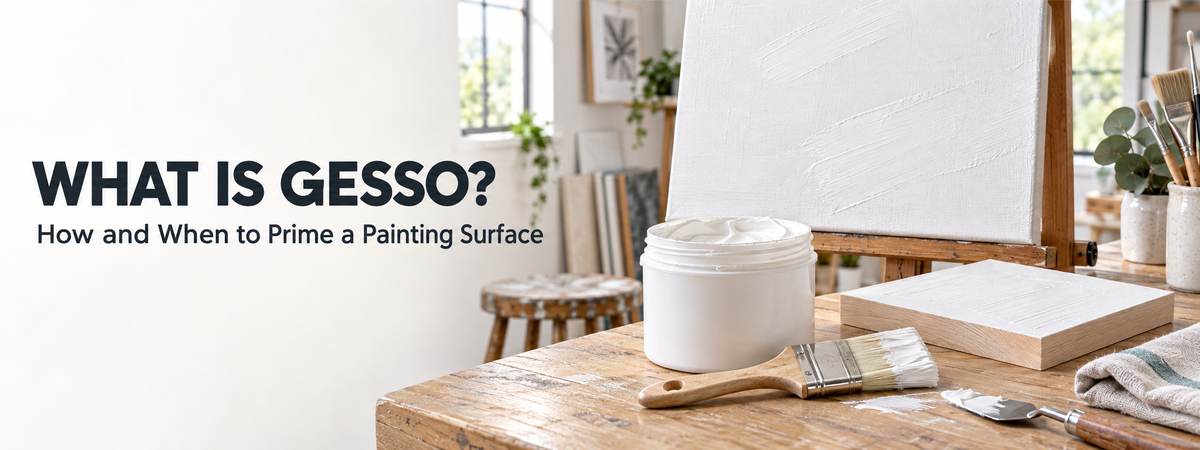
Preparing your painting surface may not be the most exciting part of starting an artwork, but it can have a major effect on how your paint behaves and how the finished piece looks.
Gesso helps create a more consistent painting surface, improves paint adhesion and controls how much paint is absorbed into the material underneath. It can be applied to canvas, wooden panels, paper and many other suitable surfaces.
But do you need to apply gesso to every canvas? How many coats should you use? And what is the difference between white, black and clear gesso?
This guide explains what artists need to know before opening the paint.
What Is Gesso?
Gesso is a surface preparation product applied before painting. Modern acrylic gesso usually contains an acrylic binder, white pigment and mineral fillers that give the surface a slight texture, often called tooth.
This tooth helps paint adhere to the surface instead of sliding across it or soaking into it unevenly.
Although traditional gesso and modern acrylic gesso are different materials, the word “gesso” is now commonly used for the acrylic primers sold for preparing canvas, wood and other artist surfaces.
What Does Gesso Do?
Gesso creates a barrier between your paint and the material underneath. It also allows you to change the colour, texture and absorbency of the painting surface.
Applying gesso can help:
- Prevent paint from soaking excessively into the surface
- Create a more consistent base for painting
- Improve the adhesion of acrylic or oil paint
- Reduce the amount of paint needed for early layers
- Protect natural fibres from direct contact with oil paint
- Create a smoother or more textured painting surface
- Cover marks, stains or unwanted background colours
Do You Need to Gesso a Preprimed Canvas?
Most commercially prepared stretched canvases and canvas panels are already primed and can be painted on immediately. Look at the product description or packaging for terms such as “primed”, “triple primed” or “ready to paint”.
You do not normally need to apply more gesso to a properly preprimed canvas. However, an additional coat may be useful if you want to change the character of the surface.
You might add more gesso when you want:
- A smoother surface for portraits or detailed painting
- More tooth for dry brush or layered techniques
- A less absorbent painting surface
- A coloured ground instead of bright white
- To cover the texture or colour of an earlier painting
If you like the existing surface, there is no benefit in adding extra coats simply because you think every canvas must be primed again.
Which Surfaces Need Gesso?
Raw Canvas and Linen
Raw fabric should be properly prepared before it is used for conventional acrylic or oil painting. Priming controls absorbency and provides a stable surface for the paint.
Surface preparation is particularly important for oil painting because oil should not be allowed to penetrate directly into untreated natural fibres.
Wooden Painting Panels
Unprimed wood can be highly absorbent. Applying suitable preparation and gesso helps create a more even surface and reduces the chance of the wood drawing binder out of the paint.
Before priming, make sure the panel is clean, dry and free from loose dust. Depending on the wood and intended medium, the panel may also require sealing before gesso is applied.
Paper and Card
Gesso can strengthen heavier paper and provide a less absorbent base for acrylic painting and mixed media. Thin paper may buckle when wet, so choose a heavier sheet and secure it to a board before applying gesso.
Previously Painted Surfaces
Gesso can sometimes be used to prepare an old acrylic painting for reuse. The existing surface should be stable, clean and lightly prepared so the new layer can adhere properly.
Avoid painting over surfaces that are peeling, oily, flexible or structurally damaged.
White, Black or Clear Gesso?
White Gesso
White is the most common choice. It creates a bright base that helps transparent and light colours remain luminous. It is suitable for most general acrylic and oil painting projects.
Black Gesso
Black gesso creates a dark ground before painting begins. It is useful for dramatic portraits, night scenes, tonal studies and artworks where the dark surface will remain visible between brushstrokes.
Painting over black gesso can change the way colours appear, so some lighter or more transparent colours may need additional layers.
Clear Gesso
Clear gesso adds tooth while allowing the original surface to remain visible. Artists may use it over wood, coloured paper, printed material or prepared surfaces where they want to preserve the underlying colour or pattern.
How to Apply Acrylic Gesso
1. Prepare the Surface
Make sure the surface is clean, dry and free from grease or dust. If you are working on a wooden panel, lightly sand rough areas and remove all sanding residue.
2. Stir the Gesso
Stir gently until the product has an even consistency. Avoid shaking the container vigorously because this can introduce air bubbles.
3. Apply a Thin, Even Coat
Use a broad brush, foam roller or suitable painting tool. Apply the first coat evenly across the surface. Heavy applications can take longer to dry and may preserve unwanted ridges.
4. Allow It to Dry
Follow the drying instructions supplied by the manufacturer. Drying time will vary according to the product, thickness, temperature and humidity.
5. Add Another Coat
If another coat is required, apply it in a different direction. Changing the direction of each coat can help produce more even coverage.
6. Sand if You Want a Smooth Finish
Once the layer is completely dry, lightly sand it with fine sandpaper. Remove the dust before applying the next coat.
For a textured surface, leave the visible brush marks or apply the gesso with a roller or painting knife.
How Many Coats of Gesso Should You Apply?
There is no single number that suits every project. The correct amount depends on the surface and the finish you want.
- Preprimed canvas: No additional coat may be necessary.
- Raw or highly absorbent surfaces: Several properly applied preparation layers may be required.
- General acrylic painting: One or two additional coats can adjust the surface.
- Smooth detailed work: Apply multiple thin coats and sand between them.
- Expressive painting: Leave some brush or roller texture visible.
Several thin coats generally provide better control than one very thick application.
Can You Mix Paint with Gesso?
A small amount of acrylic colour can be mixed with compatible acrylic gesso to create a toned painting ground. A warm neutral, grey or earthy colour can make it easier to judge light and dark values than working directly on a bright white background.
Adding too much paint may change the working properties of the primer. If you want a strong colour, another option is to apply the gesso normally and add a thin coloured acrylic ground after it has dried.
Common Gesso Mistakes
Applying It Too Thickly
Very thick layers may dry unevenly and retain heavy brush ridges. Build the surface gradually with thinner coats.
Painting Before It Is Dry
A surface may feel dry on top while still holding moisture underneath. Allow sufficient drying time, especially after a thick application.
Not Removing Sanding Dust
Dust left on the surface can interfere with the next layer. Wipe it away carefully before continuing.
Assuming Every Canvas Needs More Gesso
A quality preprimed canvas is already designed for painting. Only add another coat when you want to alter the surface.
Using the Wrong Primer
Check that the primer is compatible with your painting medium and chosen surface. Acrylic gesso is versatile, but specialised grounds may be more appropriate for certain materials or techniques.
Choosing the Right Surface Preparation
Use white gesso when you want a bright and versatile base. Choose black gesso for a dramatic dark ground, or clear gesso when the colour and character of the original surface should remain visible.
The best preparation depends on your surface, paint and preferred finish. Some artists enjoy a smooth surface with very little visible texture, while others deliberately preserve brush marks to give the painting more energy.
Experiment with different application tools and finishes on a small panel before preparing an important artwork.
Prepare Your Next Painting
A carefully prepared surface gives you more control over paint application and provides a reliable foundation for your artwork. Whether you are working on canvas, linen, paper or wood, the right primer can help you achieve the texture and absorbency you prefer.
Shop artist gesso and surface preparation products or explore the LUCA Surface Sale at Art Supplies Australia.
LUCA is exclusive to Art Supplies Australia.